 Energy Bite
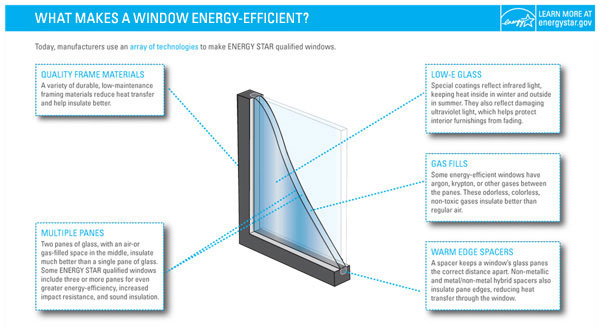
Stephen Lee, professor in Carnegie Mellon’s School of Architecture, explains how windows can affect our home energy use.
Listen
Respond
Learn more
Energy Efficient Windows from the U.S. Department of Energy
Repair and Upgrade Windows and Doors from the National Park Service
Frequently Asked Questions from Home Energy Saver
Transcript
HOST: Have you wondered whether you should get new windows to improve the energy efficiency of your home? On this week’s Energy Bite, Stephen Lee, a professor at Carnegie Mellon University, has some answers.
LEE: There are two sources of energy consumption related to windows. The first is the loss or gain of heat through the window’s glass. If you have old wood-framed single-pane windows, you should consider replacing them. The second source is air leakage around the frames. Older Pittsburgh homes with poorly-sealed windows can leak 10 times the air you paid to heat or cool every hour of ever day compared with properly installed new windows.
HOST: How do you know if replacing the windows make economic sense?
LEE: The cost of the new windows in a pre-WWII war home in Pittsburgh will be paid back in approximately 10 years. But don’t replace your windows until you have first insulated your roof and walls, which has a payback time of only 3 years.
To find out whether or not you need new windows due to air leakage, you will need an energy auditor to do a “blower door” test of your home.
HOST: Would you invest in new windows for your home? Take our poll, see the results, and ask your energy questions at Energy Bite dot org.
ANNOUNCER: Energy Bite is a co-production between 90.5 WESA and Carnegie Mellon’s’ Scott Institute for Energy Innovation.
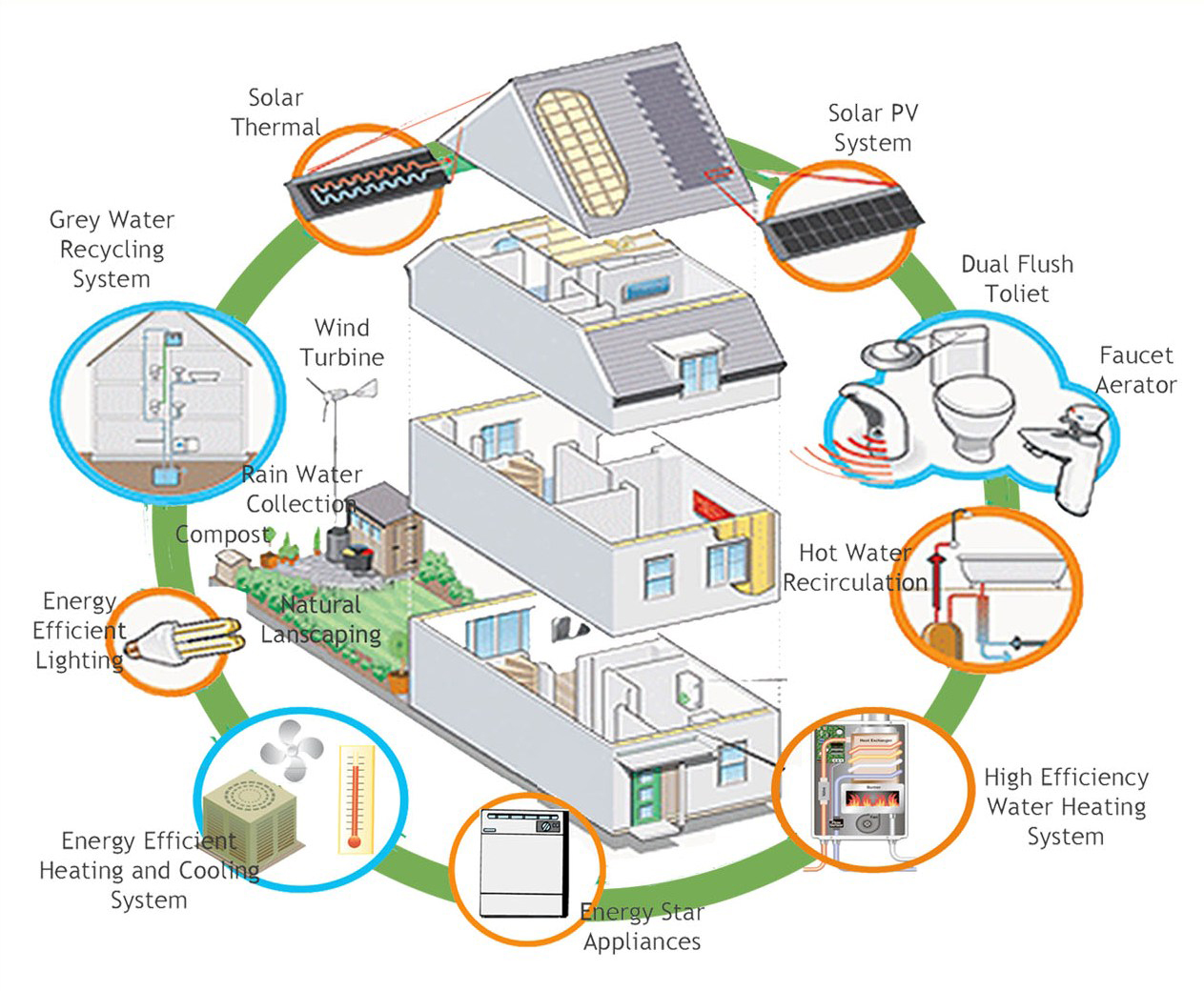
Curious how to make a big impact on your home’s energy use? Stephen Lee, professor in Carnegie Mellon’s School of Architecture, explains how home insulation makes all the difference.
Listen
Respond
Learn more
Tips on Saving Money and Energy at HomeTips on Saving Money and Energy at Home from the U.S. Department of Energy
Energy Efficient Home Design from the U.S. Department of Energy
9 Ways to Make Your Home More Energy Efficient from the U.S. Green Building Council
Transcript
HOST: Have you wondered what is the most cost-effective action you can take to improve the energy efficiency of your home? On this week’s Energy Bite, Stephen Lee, a professor at Carnegie Mellon University, has some answers.
LEE: The most effective energy conservation strategy for your home is insulating the roof and walls. Roofs are typically the easiest retrofit as you can add more insulation on top of what is already there and it is usually easily accessible. Walls, however, can be more challenging, as insulation must be placed in the cavity between the inside and outside walls.
HOST: How does increasing insulation in your home compare to increased use of renewable energy?
LEE: You will realize the same energy efficiency from spending $1 on insulation for your home as you would get for spending $8 on renewable energy, such as adding solar panels to your roof. In a traditional Pittsburgh home built before insulation was commonly used, you will pay back the cost of adding insulation to your home in less than three years, and you’ll be warm and comfortable during cold weather!
HOST: Would you invest in more insulation for your home? Take our poll, see the results, and ask your energy questions at Energy Bite dot org.
ANNOUNCER: Energy Bite is a co-production between 90.5 WESA and Carnegie Mellon’s’ Scott Institute for Energy Innovation.
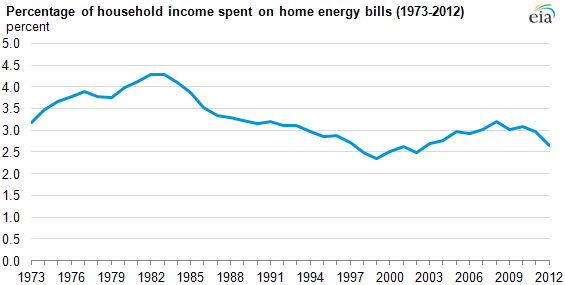
Stephen Lee, professor in Carnegie Mellon’s School of Architecture, explains how the energy crisis of 1973 affected energy consumption in the United States.
Listen
Respond
Learn more
Residential Energy Consumption Survey from the U.S. Energy Information Administration
U.S. Energy: Overview and Key Statistics from the Congressional Research Service
Energy Efficiency Trends in Residential and Commercial Buildings from the Department of Energy’s Office of Energy Efficiency and Renewable Energy
Transcript
HOST: Do you think that homes use more energy today than in the 1980’s? On this week’s Energy Bite, Stephen Lee, a professor at Carnegie Mellon University, has some answers.
LEE: We have 36% more households today than in 1980 (111M vs. 82M), yet the total energy consumed in the residential sector is only 13% greater. In fact, on a per square foot basis, we have reduced energy use by 37%. This is due to more stringent energy codes that result in increased insulation levels, better windows and more efficient appliances.
We have seen an increase in electricity consumption, due to the increased use of air conditioning and a dramatic increase in the number of electronic devices, while natural gas use has remained fairly constant.
HOST: What are the implications for the mix of energy sources we use for home electricity?
LEE: The good news is that when we most need electricity – in the summer for air conditioning – it is also the best time for solar power. Depending on region, there can be four times as much sunlight available to provide electricity in July than in January. This abundance of renewable energy can help utility companies deal with peak demand on the grid.
HOST: What is your home’s energy consumption? Take our poll, see the results, and ask your energy questions at Energy Bite dot org.
ANNOUNCER: Energy Bite is a co-production between 90.5 WESA and Carnegie Mellon’s’ Scott Institute for Energy Innovation.

Jay Apt, from Carnegie Mellon’s Tepper School of Business and Department of Engineering & Public Policy, explains how microgrids can help us recover quickly in the case of a blackout.
Listen
Respond
Learn more
How Microgrids Work from the U.S. Department of Energy
Microgrid Activities from the U.S. Department of Energy
Blackouts are a Fact of Life. Let’s Deal with Them by Jay Apt
The Resilience of the Electric Power Delivery System in Response to Terrorism and Natural Disasters by the National Research Council
Economic Benefits of Increasing Electric Grid Resilience to Weather Outages from The Office of the President
Transcript
HOST: Have you ever wondered how cities can better prepare for blackouts? On this week’s Energy Bite, Jay Apt, a professor at Carnegie Mellon University, has some answers.
APT: Blackouts due to hurricanes, ice storms, and earthquakes cannot be prevented. But that does not mean we have to do without the essential services electricity provides. U.S. building codes often require tall buildings with elevators to have a backup diesel generator so that people don’t have to walk up 30 flights of stairs. And some cities have low power LED traffic lights with solar panels and batteries to keep them working in essential urban corridors. Microgrids are another option.
HOST: What is a microgrid?
APT: A microgrid is a small version of the electric grid we know today. It’s small in the sense that it might generate power for just a neighborhood or a shopping center, for example. Microgrids for electric power may violate the exclusive territory of utilities, but some states are experimenting with allowing microgrids because they have significant advantages for reliability. After Hurricane Sandy, for example, microgrids were very important in keeping the power on in neighborhoods.
HOST: Would you support a microgrid in your community? Take our poll, see the results, and ask your energy questions at Energy Bite dot org.
ANNOUNCER: Energy Bite is a co-production between 90.5 WESA and Carnegie Mellon’s’ Scott Institute for Energy Innovation.
Professor Jay Apt, from Carnegie Mellon’s Tepper School of Business and the Department of Engineering & Public Policy, examines the inevitability of electrical blackouts and how we can be prepared.
Listen
Learn more
What You Need to Know When the Power Goes Out Unexpectedly from the Centers for Disease Control and Prevention
Economic Benefits of Increasing Electric Grid Resilience to Weather Outages from the Department of Energy
Final Report on the August 14, 2003 Blackout in the United States and Canada from the U.S.-Canada Power System Outage Task Force (2004)
Energy Disruption Map from the U.S. Energy Information Administration
Power Outage Tips from Ready.gov
Transcript
HOST: Have you ever wondered if we can prevent electrical blackouts? On this week’s Energy Bite, Jay Apt, a professor at Carnegie Mellon University, has some answers.
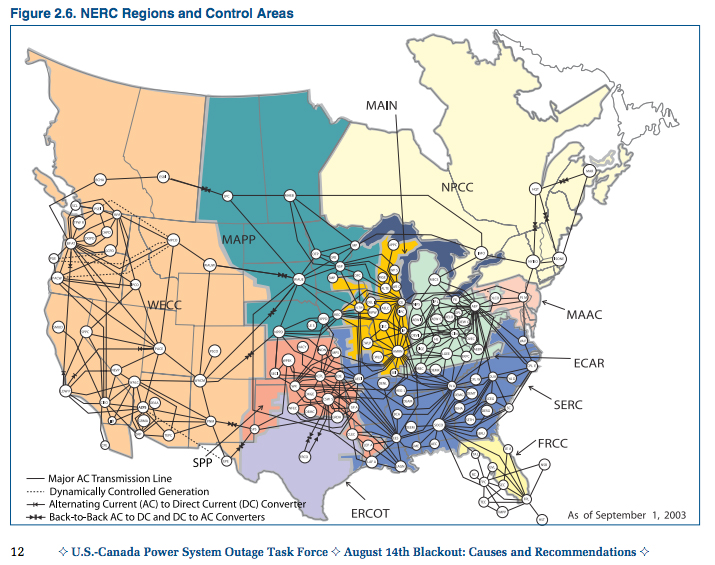
APT: Most losses of electric power are caused by small things, like a a pickup truck knocking a pole down or ice on the wires in your neighborhood. But sometimes huge blackouts happen, like the 2003 northeast outage that took out 20 million customers.
We’ve looked at data on blackouts over the last 30 years, and there isn’t any change in the statistics at all. So, blackouts due to things like hurricanes, earthquakes, and wildfires will be with us for a very long time to come.
HOST: How can we better prepare for blackouts?
APT: I lived in Houston for 15 years, and we got a category 1 hurricane ever three or four years there, resulting in power outages of 5 days or a week. Here in the North, where ice storms can take power out for weeks at a time, as they did in Montreal in the 1990s, people are less prepared. But we can be more prepared if neighborhood associations have generators and small microgrids that could keep essential services going until power returns.
HOST: Are you prepared for an electrical blackout? Take our poll, see the results, and ask your energy questions at Energy Bite dot org.
ANNOUNCER: Energy Bite is a co-production between 90.5 WESA and Carnegie Mellon’s’ Scott Institute for Energy Innovation.

Jay Apt, a professor at Carnegie Mellon University’s Tepper School of Business and in the CMU Department of Engineering & Public Policy, explains why utility companies are charging consumers for investing in solar energy.
Listen
Respond
Learn more
Customer Choice and the Power Industry of the Future from the Congressional Research Service
Straight Talk About Net Metering from the Edison Electric Institute
Net Metering from the Solar Energy Industry Association
Transcript
HOST: Have you ever wondered by some power companies charge a fee to customers who install solar panels? On this week’s Energy Bite, Jay Apt, a professor at Carnegie Mellon University, has some answers.
APT: The issue of what the specialists call net metering, being able to sell power back to the electric power grid at the wholesale prices, and the issue of standby charges, what the utility will charge a customer just for standing by so they have a source a power when they aren’t generating power themsleves, those are two of the most contentious issues in electric power today.
HOST: Why is it contentious?
APT: Solar panels can reduce a homeowners need for kilowatt hours from their utility. But the utility still has to keep the wires and transformers in place to supply that customer with power when the need it – at night, when their battery is out of juice. In order to pay for those transformers and wires, the utility has to charge something to the customer. The argument is whether they are charging a fair or unfair amount.
Whether or not it is fair depends on whether you are the customer or the utility. And resolving the issue will probably require an independent commission, say the public utility commission of a state, to determine what’s fair.
HOST: Do you think power companies should charge a fee to customers who install solar panels? Take our poll, see the results, and ask your energy questions at Energy Bite dot org.
ANNOUNCER: Energy Bite is a co-production between 90.5 WESA and Carnegie Mellon’s’ Scott Institute for Energy Innovation.
Jay Apt, a professor at Carnegie Mellon University’s Tepper School of Business and in the CMU Department of Engineering & Public Policy, explains what it means to go off the grid and how a community can do it.
Listen
Respond
Learn more
Off the Grid or Standalone Energy Systems from the U.S. Department of Energy
How Microgrids Will Shape the Future from the National Renewable Energy Laboratory
Going off the Grid with Solar from the U.S. Department of Energy
Community and Shared Solar from the U.S. Department of Energy
Transcript
HOST: Have you ever thought about your community going off the electric grid entirely? How hard would it be? On this week’s Energy Bite, Jay Apt, a professor at Carnegie Mellon University, has some answers.
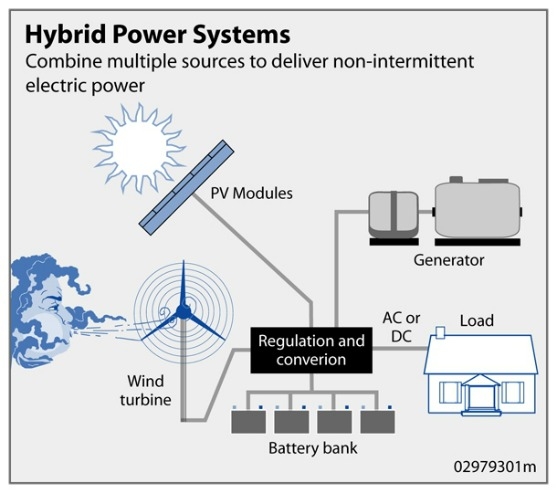
APT: To go completely off the electricity grid, you need a source of fuel that will generate power for you any time that you want it. You can do that in several ways. One way is to go with wind and solar and a very large energy storage device such as a battery or pumped hydroelectric power.
The second is to go off the electric grid, but stay on the natural gas grid and generate your power through natural gas. That has an advantage as you can capture the heat from the natural gas process and use it to heat your factory or hospital. It’s off grid in the electric power sense, but on grid for natural gas.
HOST: How hard is it to go off grid?
APT: The difficulty with off grid solutions in general is that you have to maintain your equipment and there will be some times when it just breaks. When that happens, you need some mechanism to reduce your demand, or if that is not possible, have a separate source of power.
HOST: Is going off the grid an option for your community? Take our poll, see the results, and ask your energy questions at Energy Bite dot org.
ANNOUNCER: Energy Bite is a co-production between 90.5 WESA and Carnegie Mellon’s’ Scott Institute for Energy Innovation.
This episode of Energy Bite features Jay Apt, a professor at Carnegie Mellon University’s Tepper School of Business and in the CMU Department of Engineering & Public Policy, discussing why location matters when it comes to renewable energy plants.
Listen
Respond
Learn more
Where Wind Power is Harnessed from the Energy Information Agency
Where Solar is Found from the Energy Information Agency
Trends in Renewable Energy Consumption from the Energy Information Agency
U.S. Wind Maps from the National Renewable Energy Laboratory
U.S. Solar Maps from the National Renewable Energy Laboratory
Transcript
HOST: Have you ever wondered whether wind and solar plants should be located to best lower air pollution? On this week’s Energy Bite, Jay Apt, a professor at Carnegie Mellon University, has some answers.
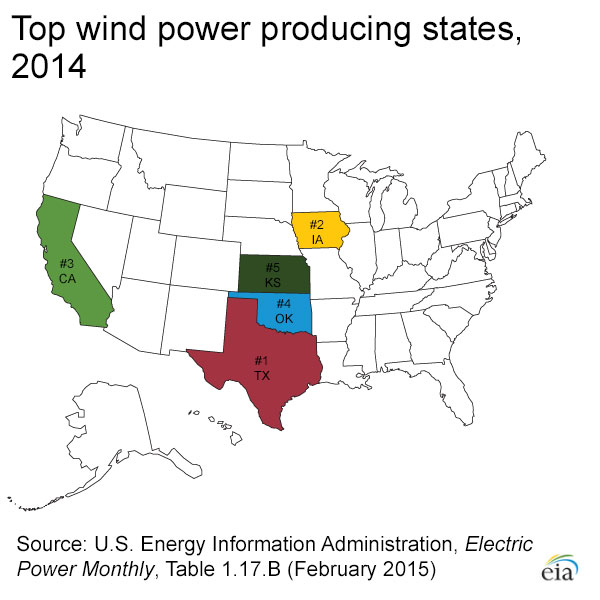
APT: We all know that the sun shines most in the southwest part of the United States and the wind blows the most in the Great Plains. But that doesn’t necessarily mean that is where you should locate wind and solar plants.
If your objective is to decrease polluting power sources, you should locate the wind and solar where we have existing high pollution electric power sources. And thus increase the share of renewable power. In many cases, the renewable power can be less expensive than, let’s say, building a new coal plant in the Ohio Valley.
HOST: Can you give an example of how this might work?
APT: Some years ago, New Jersey passed incentives that have tremendously increased the amount of solar power in that state. I thought initially that was not an effective policy, because the sun does not shine as much in New Jersey as say it does in Arizona. But I came to realize that in New Jersey, solar power was displacing some old oil power plants and so it was a cost effective power that significantly reduced pollution.
HOST: Do you think wind and solar power are right for your region? Take our poll, see the results, and ask your energy questions at Energy Bite dot org.
ANNOUNCER: Energy Bite is a co-production between 90.5 WESA and Carnegie Mellon’s’ Scott Institute for Energy Innovation.
Jay Apt, a professor at Carnegie Mellon University’s Tepper School of Business and in the CMU Department of Engineering & Public Policy, Discusses low pollution electric power sources.
Listen
Respond
Learn more
Emissions & Generation Resource Integrated Database (eGRID) from the Environmental Protection Agency
Nuclear Energy and the Environment from the Nuclear Energy Institute
Renewable Electricity Generation from the US Department of Energy
Transcript
HOST: Have you ever wondered whether wind and solar are our only options for low pollution electric generation? On this week’s Energy Bite, Jay Apt, a professor at Carnegie Mellon University, has some answers.
APT: When I was a boy in the early 1950s, the US has 30 percent of its electric power generated by low pollution sources. Of course, that was mainly hydroelectric power. And the amount of hydroelectric power has stayed fixed while demand for electricity has shot up. So hydro’s power share has been diluted to a few percent.
HOST: How much of our electric generation is low in carbon pollution today?
APT: The policies that have increased wind and solar has brought us up to about 13 percent, including wind, solar, biomass, hydroelectric power, and geothermal power. But our total low carbon electric power is a little over 30 percent.
What is the difference between the 13 and 30 percent? It’s nuclear power. Nuclear power has no pollution and has other attributes that some of us find undesirable, however it is no question that it emits much lower pollution than some of our fossil fuel sources.
HOST: Which low pollution source of electric generation do you favor? Take our poll, see the results, and ask your energy questions at Energy Bite dot org.
ANNOUNCER: Energy Bite is a co-production between 90.5 WESA and Carnegie Mellon’s’ Scott Institute for Energy Innovation.
Jay Apt, a professor at Carnegie Mellon University’s Tepper School of Business and in the CMU Department of Engineering & Public Policy, tells us how much we could increase our energy generation from renewables like wind and solar. He also explains the challenge to relying too much on renewables.
Listen
Respond
Learn more
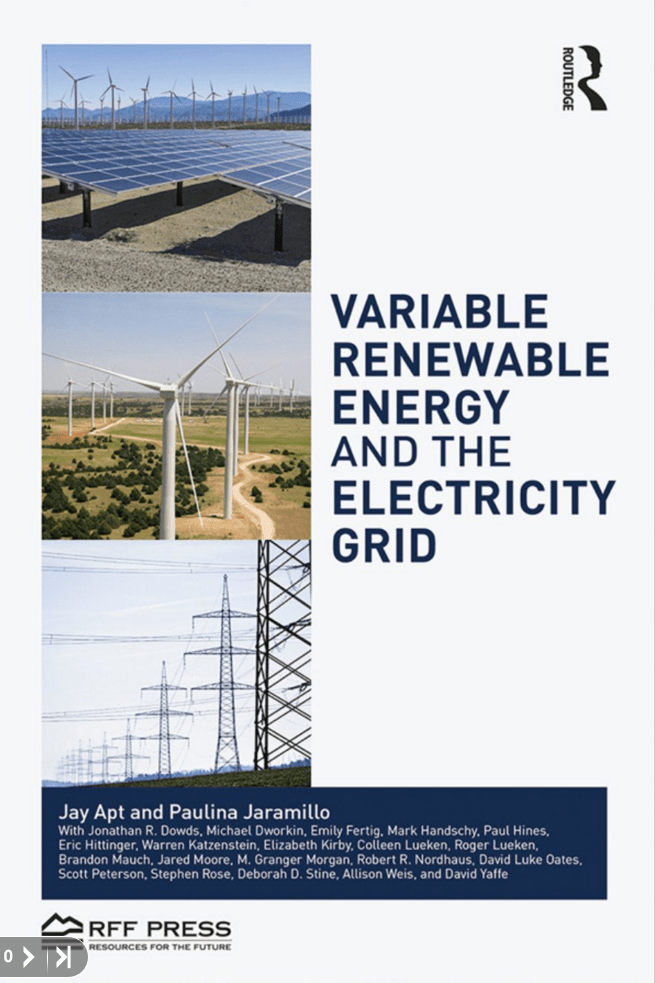
Variable Renewable Energy and the Electricity Grid by Jay Apt and Paulina Jaramillo
Renewable Electricity Futures Study from the National Renewable Energy Laboratory
Managing Variable Energy Resources to Increase Renewable Electricity’s Contribution to the Grid Policy Guide from the Scott Institute for Energy Innovation
Transcript
HOST: Have you ever wondered how much of our electric power could be generated by renewables like wind and solar? On this week’s Energy Bite, Jay Apt, a professor at Carnegie Mellon University, has some answers.
APT: In the U.S., just over 5 percent of our electric power is generated by wind and solar power today. Another 6 percent is generated by hydroelectric power. We can get to at least 20-30% of our electric power from variable renewables like wind and solar before we run into interesting and expensive issues.
Germany has 17% wind and solar today so we know it is achievable. It is pretty clear the United States could go from 5 percent to 15 percent wind and solar power within a decade.
HOST: What is the primary barrier to reaching that goal?
APT: The primary barrier is that when you try to match demand with generation, you have to do at the very instant . So you need to have other forms of power generation available at a moment’s notice to pinch-hit for when the sun does not shine or the wind does not blow. That cost must be factored into the cost of variable energy sources like wind and solar power.
HOST: How much of our electric power do you believe should come from solar and wind power? Take our poll, see the results, and ask your energy questions at Energy Bite dot org.
ANNOUNCER: Energy Bite is a co-production between 90.5 WESA and Carnegie Mellon’s’ Scott Institute for Energy Innovation.


 Energy Bite