 Energy Bite

Nick Muller, a visiting professor at Carnegie Mellon University explains whether Gross Domestic Product is a good way to gauge the effects of environmental policy.
Listen
Respond
Learn more
Effects of a Carbon Tax on the Economy and the Environment from the Congressional Budget Office
Recent advances and challenges in benefit-cost analysis by Nick Muller
Economic Growth and the Environment by Tim Everett, Mallika Ishwaran, Gian Paolo Ansaloni and Alex Rubin
Transcript
HOST: How does environmental policy affect measures like GDP? On this week’s Energy Bite, Nick Muller, a visiting professor at Carnegie Mellon University, has some answers.
MULLER: In most cases, measures like GDP (the gross domestic product) only count the costs to firms and consumers from environmental policy. As a result, for the most part, environmental policy acts as a drag on GDP. However, current research suggests that many environmental policies produce considerable benefits to human health and the environment.
HOST: What are these benefits?
MULLER: Most of these benefits are due to improvements in human health and life expectancy, which are readily converted to monetary terms. Importantly, GDP does not include the value associated with changes to life expectancy. As a result, conventional measures of economic performance cannot include or reflect the full consequences of environmental policy.
Relying on GDP to gauge the effect of environmental policy is worse than simply being incomplete. It is a biased measure because GDP omits the benefits of environmental policy (which would boost GDP) and includes the costs (which put a drag on growth).
HOST: Do you think the calculation for GDP should be changed to include not only costs but the benefits of environmental policy? Take our poll, see the results, and ask your energy questions at Energy Bite dot org.
ANNOUNCER: Energy Bite is a co-production between 90.5 WESA and Carnegie Mellon’s’ Scott Institute for Energy Innovation.

Electric vehicles are gaining popularity because of perceived benefits to the environment. Nick Muller, a visiting professor at Carnegie Mellon, explains how to know if an electric vehicle is right for you.
Listen
Respond
Learn more
Analysing environmental benefits from driving electric vehicles by Stephen P. Holland, Erin T. Mansur, Nicholas Z. Muller, Andrew J. Yates
All-Electric Vehicles from FuelEconomy.gov
Transcript
HOST: Should you buy that electric vehicle you’ve been considering? On this week’s Energy Bite, Nick Muller, a visiting professor at Carnegie Mellon University, has some answers.
MULLER: The motivation for purchasing an electric vehicle may stem from a variety of sources. These include environmental values, costs of operation, and national security due to decreased reliance on imported fossil fuels. Recent research calls into question whether electric vehicles actually produce tangible environmental benefits.
HOST: Why is that?
MULLER: The environmental impacts from electric vehicles tend to outweigh impacts from conventional vehicles mostly due to battery manufacturing. Additionally, when an electric vehicle is charged, emissions depend on what fuels are used to generate electricity. In areas of the U.S. where power is generated mostly by burning coal, electric vehicles tend to be worse for the environment than gasoline vehicles
The electricity grid in the U.S. has changed considerably over the past decade. Given the current and likely future regulatory landscape it is expected that coal will continue to fall lower as a share of total power produced in the U.S. This means that the environmental benefits of electric vehicles will likely rise over time.
HOST: Are you considering buying an electric vehicle? If so, why? Take our poll, see the results, and ask your energy questions at Energy Bite dot org.
ANNOUNCER: Energy Bite is a co-production between 90.5 WESA and Carnegie Mellon’s’ Scott Institute for Energy Innovation.

Are regulations really necessary to address environmental issues, or can they be addressed by the market? Nick Muller, a visiting professor at Carnegie Mellon, explains how environmental issues are addressed by the market – and how they’re not.
Listen
Respond
Learn more
Air pollution emissions and damages from energy production in the U.S.: 2002–2011 by Nicholas Muller and Paulina Jaramillo
Comment on “Diminishing Returns or Compounding Benefits of Air Pollution Control? The Case of NOx and Ozone” by Nick Muller
Boosting GDP growth by accounting for the environment by Nick Muller
Economic Incentives from the Environmental Protection Agency
Transcript
HOST: Do markets tend to solve environmental problems like pollution without government regulation? On this week’s Energy Bite, Nick Muller, a visiting professor at Carnegie Mellon University, has some answers.
MULLER: No, in most cases markets fail to appropriately deal with environmental issues like pollution. The consequences of emissions generated through the production or consumption of certain goods are not felt by buyers and sellers in market transactions for such goods. As a result, neither firms nor consumers have an incentive to take these impacts into consideration when making decisions.
HOST: Does that mean then that it falls to the government to guide the market?
MULLER: The role of government is to compel either firms or consumers to consider these costs when making their production or consumption decisions. Governments can (and have) done this through a variety of policy types: standards, taxes, or pollution allowances.
The connection between environmental policy and pollution impacts is most clear in the case of an emission tax. The correct emission tax should be set to equal the damage, or social cost, due to emissions of a particular pollutant. In most cases, this will raise the price of the good and reduce the amount produced and consumed.
HOST: Do you think there should be a tax on emissions? Take our poll, see the results, and ask your energy questions at Energy Bite dot org.
ANNOUNCER: Energy Bite is a co-production between 90.5 WESA and Carnegie Mellon’s’ Scott Institute for Energy Innovation.

Can one technology solution possibly address climate change? Inês Azevedo, associate professor at the Department of Engineering and Public Policy and co-Director for the Climate and Energy Decision Making (CEDM) Center at Carnegie Mellon University explains.
Listen
Learn more
The Intergovernmental Panel on Climate Change Working Group III: Mitigation of Climate Change
Responding to Climate Change from NASA.gov
Climate Change Mitigation from the National Climate Assessment
Transcript
HOST: Have you ever wondered if there is one single technology or strategy that could solve the challenges posed by climate change? On this week’s Energy Bite, Ines Azevedo, a professor at Carnegie Mellon University, has some answers.
AZEVEDO: No, there is really not. We’ll need to use an “all of the above” energy strategy for how we produce and use electricity and power our vehicles.
HOST: What would this strategy include?
AZEVEDO: For electricity, this means improving the efficiency with which we use energy in our homes, business and industry, and in our vehicles. We will also need to increase the amount of renewable energy sources like wind and solar power as well as nuclear.
Our use of fossil fuels like coal and natural gas will continue. We’ll need to use upcoming technologies like carbon capture, though, to reduce greenhouse gas emissions from these sources.
Finally, climate change is a global issue, and we’ll need to work with other countries so emissions are reduced globally. Just as there is no one technical solution, no one country can solve climate change on its own.
HOST: Do you have a favorite technology for reducing greenhouse gas emissions? Take our poll, see the results, and ask your energy questions at Energy Bite dot org.
ANNOUNCER: Energy Bite is a co-production between 90.5 WESA and Carnegie Mellon’s’ Scott Institute for Energy Innovation.
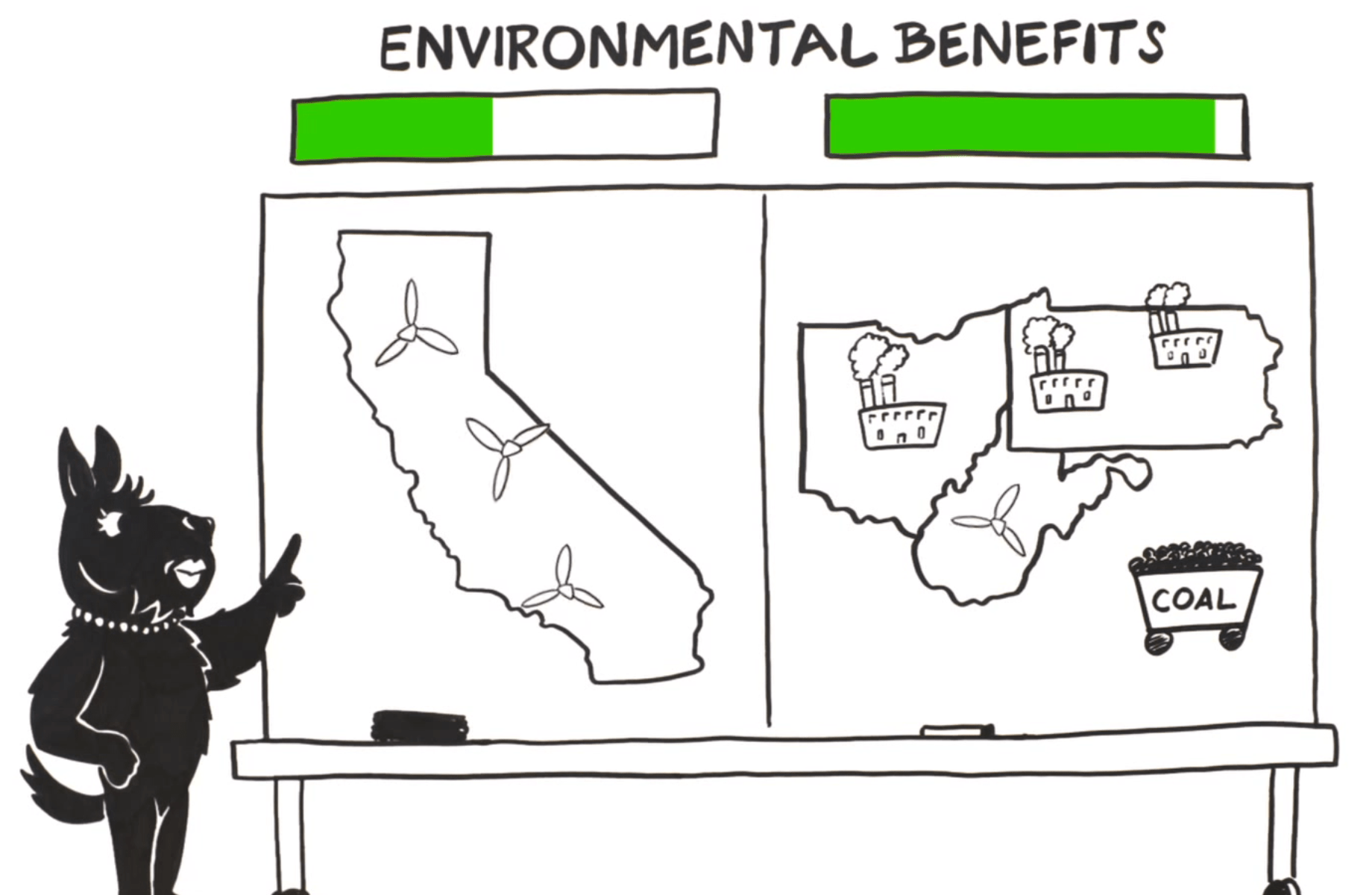
Are renewable energy sources always good, or are there areas where they have less positive impact on the environment? Inês Azevedo, associate professor at the Department of Engineering and Public Policy and co-Director for the Climate and Energy Decision Making (CEDM) Center at Carnegie Mellon University explains where renewables have the most impact.
Listen
Learn more
Regional variations in the health, environmental, and climate benefits of wind and solar generation by Kyle Siler-Evans, Inês Lima Azevedo, M. Granger Morgan, and Jay Apt
Renewable Energy from the United States Environmental Protection Agency
Are you REALLY saving the environment investing in a wind farm or solar power plant? from The Scott Institute for Energy Innovation
Transcript
HOST: Have you ever wondered about the environmental impact of renewables? On this week’s Energy Bite, Inês Azevedo, a professor at Carnegie Mellon University, has some answers.
AZEVEDO: Let me begin by asking you a question: Do you think we are better off installing the next solar panel in California or in Pennsylvania?
MODERATOR: Umm… California- because there is more sun?
AZEVEDO: Well, that answer depends on our goal. If our goal is to produce more electricity per panel, you would be right that installing that solar panel in California would be better.
But, if our goal is to produce less air pollution or greenhouse gas emissions, then we would be better installing that solar panel in Pennsylvania.
The reason is simple: despite the poor solar resource, you would mainly be displacing coal which results in more air pollution and greenhouse gas emissions than solar power.
At Carnegie Mellon, we have conducted this analysis throughout the United States, and found surprising results if our goal is emission reduction.
MODERATOR: If you were a policymaker, would you encourage solar panels in California or Pennsylvania? Take our poll, see the results, and ask your energy questions at Energy Bite dot org.
ANNOUNCER: Energy Bite is a co-production between 90.5 WESA and Carnegie Mellon’s’ Scott Institute for Energy Innovation.
Have you heard about rebates being used to get people to switch to more energy efficient devices? Inês Azevedo, associate professor at the Department of Engineering and Public Policy and co-Director for the Climate and Energy Decision Making (CEDM) Center at Carnegie Mellon University explains what rebate programs are the most effective.
Listen
Learn more
Energy Incentive Programs from the Department of Energy
State and Local Energy Efficiency Programs from the Small Business Association
Energy Efficient Appliances from EnergyStar.gov
Transcript
HOST: Have you ever wondered if rebates for energy efficient appliances work? On this week’s Energy Bite, Azevedo Azevedo, a professor at Carnegie Mellon University, has some answers.
AZEVEDO: Energy efficiency is one of the key strategies we need to pursue if we want to reduce the emissions associated with climate change. In the United States, we have a long history of energy efficiency programs and technology standards. Rebates are one of the strategies that have been used to drive people to choose for efficient appliance.
HOST: Do they work?
AZEVEDO: The answer will depend on how the rebate program is designed. We found in our research a Carnegie Mellon that if the rebate also includes a requirement for people to return or recycle their old appliance, then energy consumption in those houses is reduced by about 7%. However, if there is no requirement to recycle or return the old appliance, the energy consumption actually increases by 7%. We suspect this is because people keep their old refrigerator or air conditioner and put it elsewhere in the house. Because these consumers keep both appliances, the rebate does not reach its goal.
HOST: If you received a rebate for an energy efficient appliance, would you still keep the old one? Take our poll, see the results, and ask your energy questions at Energy Bite dot org.
ANNOUNCER: Energy Bite is a co-production between 90.5 WESA and Carnegie Mellon’s’ Scott Institute for Energy Innovation.

Inês Azevedo, associate professor at the Department of Engineering and Public Policy and co-Director for the Climate and Energy Decision Making (CEDM) Center at Carnegie Mellon University, explains what factors we should consider when deciding whether to purchase a natural gas vehicle.
Listen
Learn more
Natural Gas Vehicles from The Department of Energy’s Alternative Fuels Data Center
Natural Gas from the Department of Energy’s FuelEconomy.gov
Compressed Natural Gas (CNG) as a Transportation Fuel from the California Energy Commission’s Consumer Energy Center
Transcript
HOST: Have you ever wondered if natural gas vehicles are a good idea? On this week’s Energy Bite, Ines Azevedo, a professor at Carnegie Mellon University, has some answers.
AZEVEDO: With the low price of natural gas, you may be thinking about switching your vehicle to one that burns natural gas. The economics of doing so will depend on your personal situation, such as how many miles you drive.
But will you be increasing or decreasing air pollution and greenhouse emissions if you buy a natural gas vehicle? The answer, according to our research, is – it depends!
HOST: Why is that?
AZEVEDO: For passenger cars and trucks, emissions would increase, as natural gas engines are less efficient than those that burn gasoline. Another concern is the leakage of natural gas, also known as methane, which is one of the gases that result in climate change.
There are other opportunities, though, to use natural gas for vehicles that are environmentally-friendly. If the natural gas is first used to generate electricity, and is then used in a battery-powered electric vehicle, emissions would decrease by about 40%.
HOST: Would you buy a natural gas vehicle, a battery-powered electric vehicle, or stick with gasoline? Take our poll, see the results, and ask your energy questions at Energy Bite dot org.
ANNOUNCER: Energy Bite is a co-production between 90.5 WESA and Carnegie Mellon’s’ Scott Institute for Energy Innovation.
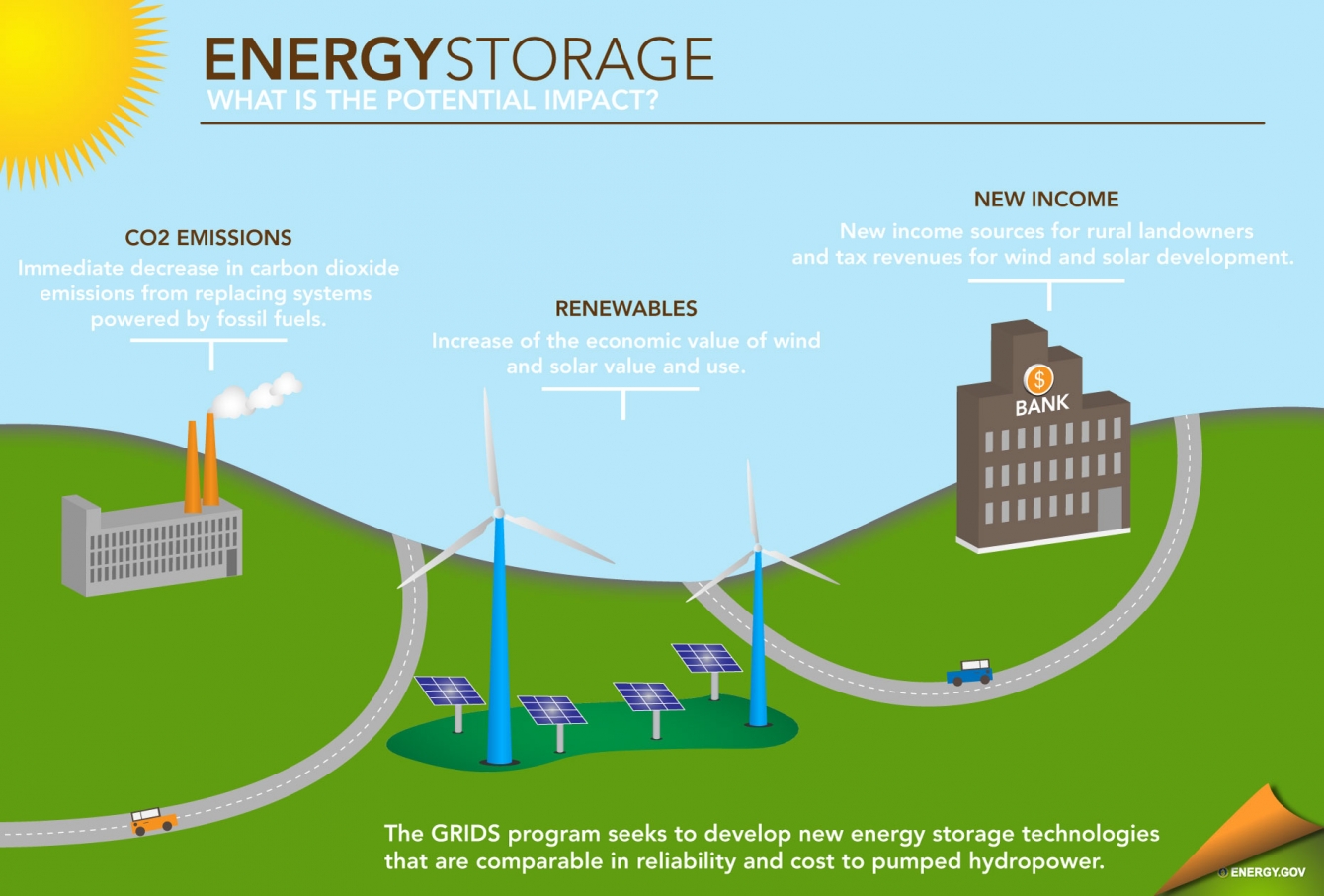
Inês Azevedo, associate professor at the Department of Engineering and Public Policy and co-Director for the Climate and Energy Decision Making (CEDM) Center at Carnegie Mellon University, explains how we store energy and whether energy storage is good for the environment.
Listen
Learn more
Energy Storage from the Department of Energy
Grid Energy Storage from the Department of Energy
Energy Storage Exchange: The DOE Global Energy Storage Database
Transcript
HOST: Have you ever wondered about the storage of energy? On this week’s Energy Bite, Inês Azevedo, a professor at Carnegie Mellon University, has some answers.
AZEVEDO: You are probably most familiar with energy stored in batteries such as for your phone or car. The goal is to accumulate energy so you have it available for use at a later time.
But energy storage is much more than that, particularly for storing electricity. As we incorporate renewable sources like solar and wind energy into the electricity grid we need to store that energy during the times when the sun shines and the wind blows, so that we can use it later when it does not.
HOST: Is the electricity stored always green?
AZEVEDO: No. In our research at Carnegie Mellon, we have found that if electricity storage operators are trying to maximize profits, they may store energy that is not green.
For example, instead of storing wind and solar energy when it is occurring during the day, they may instead store the electricity generated by coal at night. This is cheaper. This would lead to an increase rather than a decrease in air pollution and greenhouse gas emissions. So, energy storage technology is not always green in actual use.
HOST: Do you think there should be limitations on what kind of energy is stored? Take our poll, see the results, and ask your energy questions at Energy Bite dot org.
ANNOUNCER: Energy Bite is a co-production between 90.5 WESA and Carnegie Mellon’s’ Scott Institute for Energy Innovation.
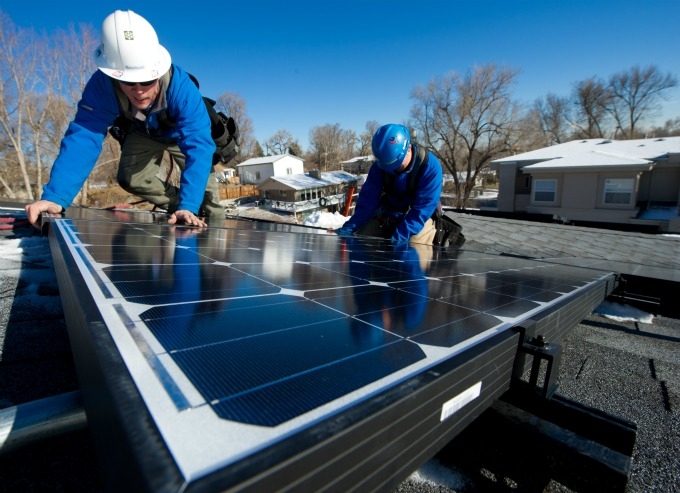
Stephen Lee, professor in Carnegie Mellon’s School of Architecture, explains how to determine if installing solar panels on the roof of your home makes economic sense.
Listen
Learn more
Pricing PV Systems and Financing Ideas from the State of California
Installing and Maintaining Home Solar Electric Systems from the U.S. Department of Energy
Get Your Power from the Sun from the U.S. Department of Energy
Planning a Home Solar Electric System from the U.S. Department of Energy
Transcript
HOST: Should you put solar photovoltaic panels on your home’s roof? On this week’s Energy Bite, Stephen Lee, a professor at Carnegie Mellon University, has some answers.
LEE: The answer to this question is a rather complicated one and depends on the amount of sun in your region as well as the insulation already present in your home. For older homes, insulation is the most important first step.
If you have a newer home built in the last two decades, however, you probably have a higher level of insulation in your home, so adding solar power to your home will provide you a higher annual percentage of energy from the sun compared to an under-insulated home.
HOST: But does it make economic sense?
LEE: The answer to that question depends on the region in which you live. In an area like Pittsburgh, that has a relatively low solar resource, the simple payback time can be high – as much as 40 years. But with lower panel prices recently and Federal tax credits and state grants that encourage investments in solar power that payback time can be dramatically reduced, and if you live in a geographic region with abundant solar energy, the payback time will also decrease. So the economics can change a great deal depending on where you live.
HOST: Would you install solar photovoltaic panels on your home’s roof? Take our poll, see the results, and ask your energy questions at Energy Bite dot org.
ANNOUNCER: Energy Bite is a co-production between 90.5 WESA and Carnegie Mellon’s’ Scott Institute for Energy Innovation.

Can heat from the ground reduce home energy costs? Stephen Lee, professor in Carnegie Mellon’s School of Architecture, explains how a ground-source heating pump helps regulate the temperature indoors.
Listen
Respond
Learn more
Geothermal Heat Pumps from the Department of Energy
Guide to Geothermal Heat Pumps from the Department of Energy
Choosing and Installing Geothermal Heat Pumps from the Department of Energy
Transcript
HOST: What is a ground-source heat pump and should you install one in your home? On this week’s Energy Bite, Stephen Lee, a professor at Carnegie Mellon University, has some answers.
LEE: You may be familiar with heat pumps and might already have one in your home. In the summer, heat pumps extract heat from your home and pump it outside. The reverse is true in the winter, when heat pumps extract heat from the outside air and pump it into your home. But, when the temperature falls below 40 degrees, this process becomes both inefficient and very expensive.
HOST: What is different about a ground source heat pump?
LEE: A ground source heat pump does this same extraction process, but as you might have guessed, from the ground, which has a nearly constant temperature all year round. Ground pumps are much more efficient, but cost more due to the need for drilling.
Some utilities do give deep discounts or rebates to homeowners who commit to electric heating, which makes ground source heat pumps more economically feasible.
HOST: Would you install a ground-source heat pump in your home? Take our poll, see the results, and ask your energy questions at Energy Bite dot org.
ANNOUNCER: Energy Bite is a co-production between 90.5 WESA and Carnegie Mellon’s’ Scott Institute for Energy Innovation.


 Energy Bite